Everyone knows a gaming phone needs a powerful processor. That’s obvious. But if you stop there, you’re missing critical features that separate genuinely great gaming phones from regular phones with fast chips.
The processor matters, yes. But five other factors determine whether your gaming experience is smooth or frustrating, whether your phone overheats after 20 minutes or handles marathon sessions, whether you’re stuck charging mid-game or playing for hours straight.
Let’s talk about what actually matters beyond the chip.
1. Cooling System (This Matters More Than Most People Realize)
Here’s the uncomfortable truth about powerful processors: they generate massive heat. And heat kills performance through thermal throttling, where your phone deliberately slows down to prevent damage.
Gaming phone reviews consistently show that cooling systems make or break sustained performance. The REDMAGIC 11 Pro, for instance, is praised as “the only phone tested so far that can handle the thermal load of Qualcomm’s latest chipset” thanks to its advanced cooling.
Modern gaming phones use various cooling technologies. Vapor chamber cooling, liquid metal heat dissipation, and even active cooling fans in phones like the REDMAGIC series. The ASUS ROG Phone 9 Pro features proprietary cooling that prevents throttling during extended gaming sessions.
Why this matters practically: A phone without proper cooling might run great for the first 15 minutes. Then performance drops. Frame rates stutter. The phone becomes uncomfortably hot to hold. With good cooling, performance stays consistent for hours.
Testing shows that phones with advanced cooling maintain performance far better than those relying only on passive dissipation. The difference between a phone that throttles and one that doesn’t can mean winning or losing in competitive games.
2. Display Refresh Rate (60Hz Won’t Cut It Anymore)
You can have the most powerful processor in the world, but if your display only refreshes 60 times per second, you’re not seeing the full performance.
Modern gaming phones feature refresh rates from 120Hz up to 185Hz. The ASUS ROG Phone 9 Pro boasts a 185Hz display, making it “the fastest screen possible” on the market currently.
What does this actually mean? Higher refresh rates make motion smoother. In fast-paced games, you see enemies sooner, movements feel more responsive, and the overall experience is dramatically better. Going from 60Hz to 120Hz is immediately noticeable. Going to 144Hz or higher? Even better for competitive gaming.
But refresh rate alone isn’t enough. Touch sampling rate matters too. This measures how quickly the screen responds to your touches. Gaming phones offer touch sampling rates of 360Hz or higher, meaning your taps register almost instantly.
Reviews emphasize that the combination of high refresh rate and high touch sampling creates a responsiveness that regular phones can’t match. In games where milliseconds matter, this advantage is real.
3. Battery Capacity and Charging Speed (Marathon Gaming Needs Both)
Gaming drains batteries faster than any other phone activity. You need both large battery capacity and fast charging to handle it.
Top gaming phones in 2026 feature batteries from 5,000mAh up to 7,050mAh. The REDMAGIC 10 Pro packs a massive 7,050mAh battery designed for uninterrupted gaming sessions. The iQOO 14 Pro Max features a 7,000mAh battery promising long gaming without interruption.
But capacity alone isn’t enough. When your battery does run low, you need fast charging. Gaming phones offer charging from 80W up to 150W. The REDMAGIC 10 Pro’s 80W charger can top off its massive battery in roughly 30 minutes.
The trade-off? Fast charging generates heat. That’s why gaming phones often recommend you don’t game while fast charging. The combined heat from gaming and charging can overwhelm even advanced cooling systems.
Practical tip: Look for phones with at least 5,500mAh batteries and 65W+ charging if you game regularly. Smaller batteries mean more frequent charging interruptions. Slower charging means longer waits when you do need to plug in.
4. Dedicated Gaming Features (Triggers, Modes, and Software)
This is where dedicated gaming phones really separate themselves from regular flagship phones with powerful specs.
Physical gaming triggers make a huge difference in competitive games. The Black Shark 5 Pro features “physical pop-up triggers” that make gaming more tactile. These shoulder buttons mimic console controllers, giving you more control options than just touchscreen.
Game mode software is another differentiator. Gaming phones include features like performance boosters, notification blockers during gaming, network prioritization, and customizable performance profiles for different games.
The ASUS ROG Phone series includes extensive gaming software allowing you to overclock, customize lighting, map controls, record gameplay, and fine-tune performance for specific games. These aren’t gimmicks. They’re genuinely useful tools that improve the gaming experience.
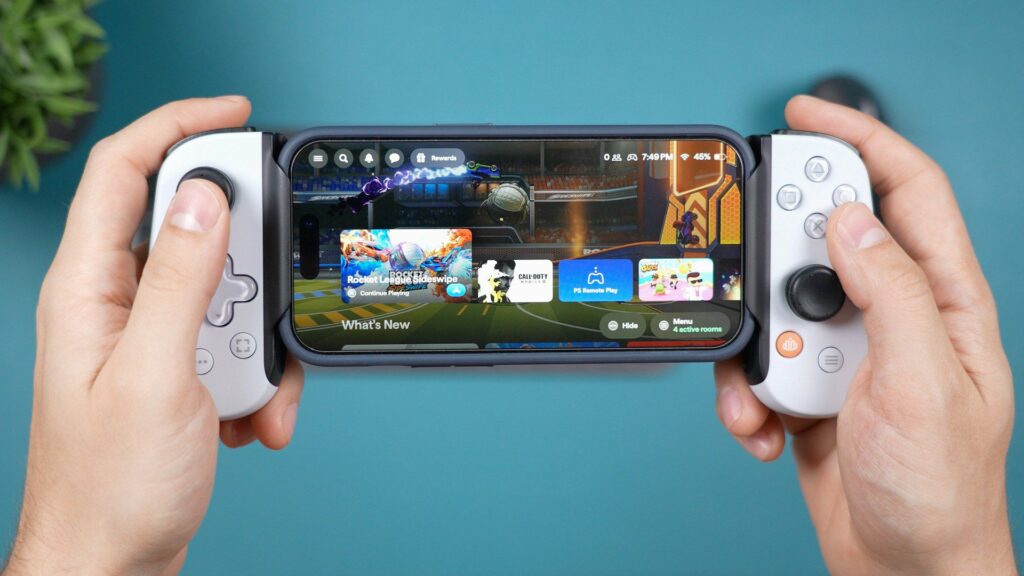
Some phones also offer accessories like cooling fans that attach magnetically, gaming controllers that connect seamlessly, and docking stations for playing on larger screens.
5. Display Quality Beyond Just Refresh Rate
Refresh rate matters, but overall display quality determines your visual experience. Resolution, brightness, color accuracy, and panel technology all play roles.
Top gaming phones feature QHD+ or 1.5K AMOLED displays. The Samsung Galaxy S25 Ultra boasts a 6.9-inch QHD+ Dynamic AMOLED display that makes games look stunning. AMOLED technology provides deeper blacks, better contrast, and more vibrant colors than LCD panels.
Screen size matters for gaming too. Most gaming phones feature 6.7-inch to 6.9-inch displays, large enough for immersive gaming without becoming unwieldy. The tall aspect ratio common in gaming phones (around 20:9) provides more vertical space useful in many games.
Brightness is crucial for outdoor gaming. Peak brightness of 1,000 nits or higher ensures you can see your screen clearly even in sunlight. HDR support makes compatible games look dramatically better with enhanced colors and contrast.
What About RAM and Storage?
You might notice I didn’t include RAM and storage in the main five features. That’s because they’re table stakes, not differentiators.
Modern gaming phones come with 12GB to 24GB of RAM as standard. That’s more than enough for any current mobile game. Storage starts at 256GB and goes up to 1TB. At those levels, RAM and storage aren’t limiting factors.
What separates good gaming phones from great ones is cooling, display quality, battery life, dedicated features, and overall gaming-optimized design. The processor gets the headlines, but these five factors determine your actual experience.
Don’t Overpay for Features You Won’t Use
Here’s honest advice: dedicated gaming phones like the ASUS ROG Phone 9 Pro or REDMAGIC 11 Pro offer the absolute best gaming performance. But they often sacrifice camera quality, software polish, and everyday usability.
If you game seriously and competitively for hours daily, those trade-offs make sense. You want every advantage, and dedicated gaming phones deliver.
But if you’re a casual gamer who also wants great cameras, clean software, and a phone that doesn’t scream “gamer,” flagship phones like the Samsung Galaxy S25 Ultra or iPhone 17 Pro Max make more sense. Reviews note these phones handle gaming excellently despite not being gaming-focused, while excelling at everything else too.
Making the Right Choice
When shopping for a gaming phone, think beyond the processor. Ask these questions:
Does it have advanced cooling that prevents thermal throttling during long sessions?
What’s the refresh rate? Is it 120Hz minimum, preferably 144Hz or higher?
How big is the battery? Is it 5,500mAh or larger? How fast does it charge?
Does it have gaming-specific features like shoulder triggers, game modes, or performance customization?
Is the display quality good enough to make games look amazing, not just run fast?
The best gaming phones of 2026 excel at all five of these factors while also having powerful processors. They’re complete packages, not just spec-sheet champions.
Don’t buy a phone just because it has the latest Snapdragon or Apple chip. Make sure it has the cooling to sustain that performance, the display to showcase it, the battery to power marathon sessions, the features to enhance your experience, and the quality to make games look as good as they perform.
That’s how you choose a real gaming phone, not just a fast phone you happen to game on.