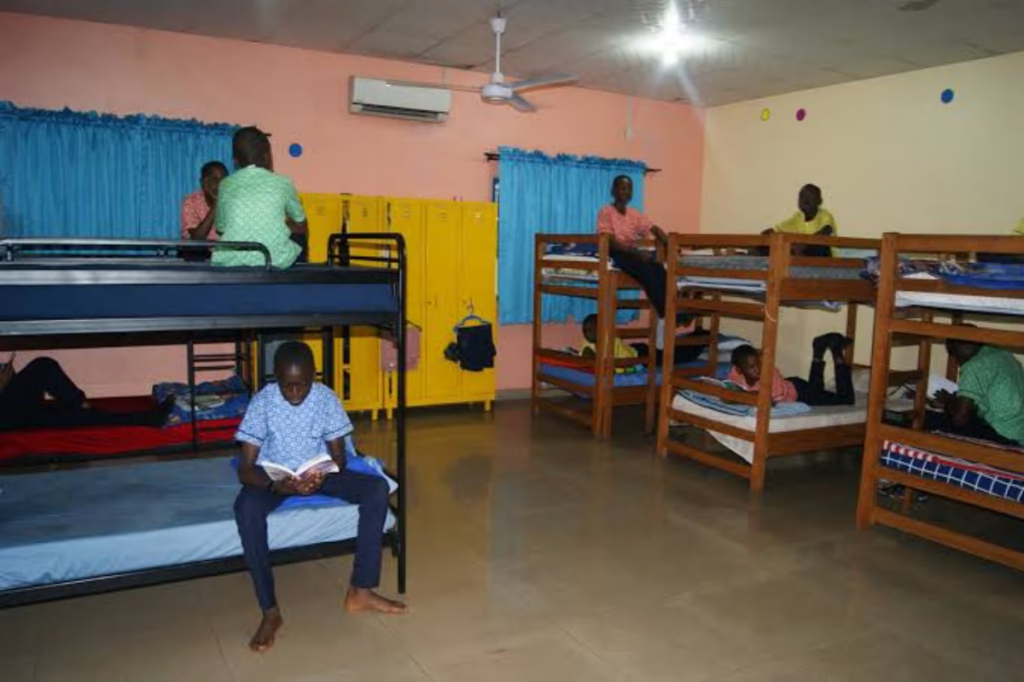
You’re thinking about boarding school for your child. Maybe you want better academics. Maybe it’s about discipline and structure. Maybe you’re considering the independence it builds. But then you see the costs and wonder: is this actually worth it?
Let’s be honest about what boarding school costs, what you actually get for that money, and whether it makes sense for Nigerian families in 2026.
The Real Cost Reality
First, let’s talk numbers. If you’re looking at international boarding schools in the US or UK, the average annual cost for seven-day boarding (full-time on campus) is around $69,150, which is roughly ₦104 million at current exchange rates. For five-day boarding where students return home weekends, it’s about $55,425 annually, around ₦83 million.
Elite schools cost even more. According to recent rankings, top US boarding schools for 2024-2025 range from $78,000 to nearly $90,000 annually. That’s ₦117 million to ₦135 million per year.
But here’s what many Nigerian parents don’t realize. These headline figures don’t tell the full story. About 40% of boarding school students in the US receive financial aid. Schools like Deerfield Academy offer average financial aid packages of $60,850. Many schools now have income-based tuition caps, making them more accessible to middle-income families than the sticker price suggests.

For Nigerian families looking at local options, the picture is different. Federal Government Colleges charge ₦100,000 for first-term fees for new students, covering boarding, uniforms, textbooks, and other expenses. That’s dramatically cheaper than international options.
Elite Nigerian boarding schools now charge between ₦1.5 million and ₦4 million per term. For three terms annually, you’re looking at ₦4.5 million to ₦12 million per year. Still expensive, but far less than sending your child abroad.
What You Actually Get for That Money
So what justifies these costs? Let’s be specific about what boarding schools offer.
24/7 Academic Immersion: Your child lives in an environment designed entirely around learning. Study halls, peer tutoring, teacher accessibility after hours. This level of academic support simply doesn’t exist at day schools.
Small Class Sizes and Individual Attention: Many top boarding schools maintain student-to-teacher ratios around 6:1 or 7:1, similar to Groton and comparable elite institutions. This means personalized attention impossible in typical Nigerian schools with 30 to 40 students per class.
Independence Training: Living away from home forces children to become self-reliant. They manage their time, handle conflicts, navigate social situations, and solve problems without parents immediately available. This builds life skills that serve them forever.
Structured Environment: Boarding schools provide routine, discipline, and accountability. For children who struggle with self-motivation or who come from chaotic home environments, this structure can be transformative.
College Preparation: Elite boarding schools have dedicated college counselors, strong university relationships, and impressive matriculation records. Many feed directly into top universities worldwide.
Nigerian Context: Local vs International
For Nigerian families, the decision isn’t just “boarding school yes or no.” It’s “which type of boarding school makes sense?”
Federal Government Colleges at ₦100,000 annually offer incredible value. Yes, facilities aren’t as modern as private schools. Yes, class sizes are larger. But you get structured boarding education at a price most middle-class families can afford.
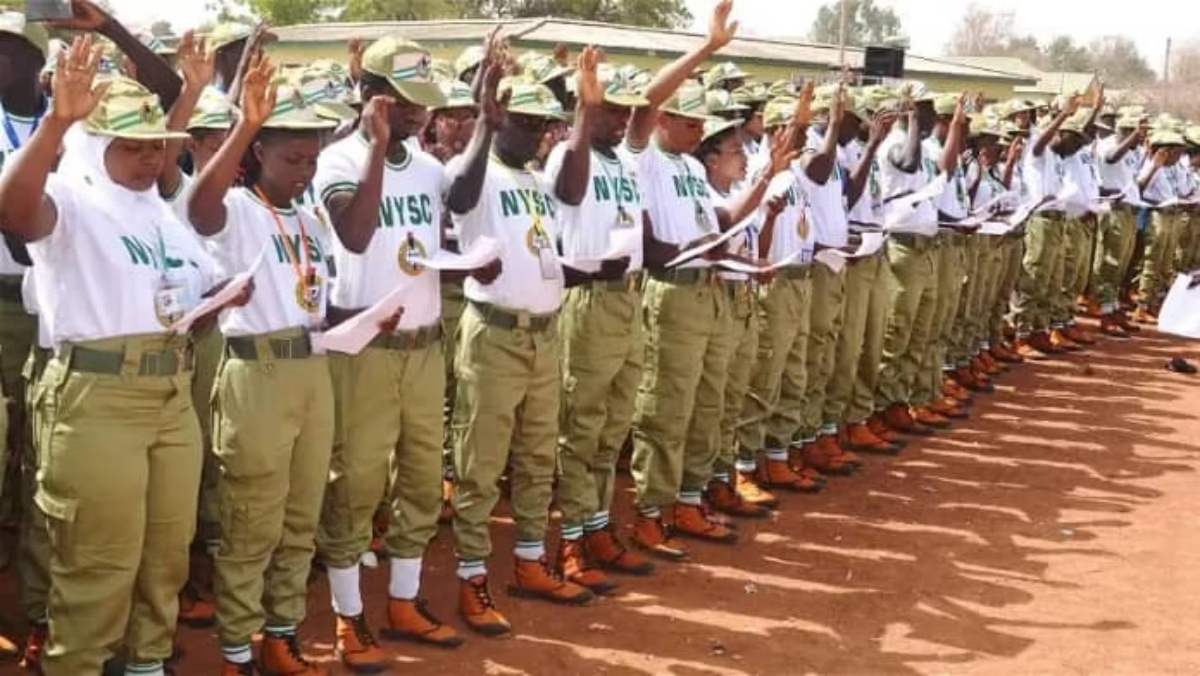
Elite Nigerian boarding schools like those charging ₦1.5M to ₦4M per term offer better facilities, smaller classes, and often dual curricula (Nigerian plus British or American). These compete with mid-tier international boarding schools at a fraction of the cost.
International boarding schools in the US or UK offer prestige, global networks, and direct pathways to top Western universities. But at ₦100 million+ annually, they’re realistic only for wealthy families or those securing substantial financial aid.
Who Thrives vs Who Struggles
Here’s one of the uncomfortable truth you might not know yet, boarding school isn’t for every child, regardless of cost.
Children who thrive at boarding school tend to be independent, adaptable, comfortable with structure, academically motivated, and socially confident. They enjoy learning, handle separation from family relatively well, and appreciate the opportunities boarding school provides.
Children who struggle are often very close to family and suffer prolonged homesickness, highly dependent on parental support for motivation, introverted to the point where constant social interaction drains them, or not academically inclined regardless of environment.
The worst outcome? Paying millions of naira for your child to be miserable, underperform, and beg to come home. This happens more often than people admit.
The Independence vs Family Time Trade-off
Boarding school means your child lives away from home most of the year. For families with strong bonds, this is painful. You miss daily interactions. You’re not there for homework struggles, friendship dramas, or small daily moments that build relationships.
Some families adapt fine. Video calls, holiday breaks, and term visits maintain closeness. Other families find the distance damages relationships that never fully recover.
Consider your family dynamics honestly. Will your child actually benefit from independence, or are they not ready for that separation? Will your family relationships survive and perhaps strengthen through distance, or will they suffer?
Alternatives That Might Work Better
Before committing to boarding school, consider alternatives that might achieve similar goals at lower cost or with less family disruption.
Elite day schools in major Nigerian cities offer excellent academics, small classes, and strong university preparation without the boarding component. Your child gets quality education while living at home.
Intensive tutoring and enrichment programs can supplement regular schooling. Hire excellent tutors, enroll in international online courses, participate in debate clubs and academic competitions. Build the skills boarding school would provide without the full cost.
Selective boarding for high school only means keeping children home through primary and junior secondary, then sending them to boarding school for senior secondary years when independence matters more and they’re better equipped emotionally.
Questions to Ask Before Deciding
If you’re seriously considering boarding school, ask yourself these questions honestly:
Can we actually afford this without destroying our family finances? Boarding school should never mean taking on crushing debt or sacrificing retirement savings.
Is my child emotionally ready for prolonged separation from family? Age matters, but so does individual temperament.
What specific problems are we trying to solve with boarding school? Better academics? More discipline? Independence? Make sure boarding school actually addresses your specific concerns.
Are there cheaper alternatives that achieve similar goals? Don’t assume boarding school is the only path to success.
Have we visited schools and talked to current parents and students? Research beyond glossy brochures and websites.
What’s our backup plan if our child struggles or hates it? Can we afford to pull them out and lose that year’s fees?
The College Admission Reality Check
Many Nigerian parents send children to expensive boarding schools assuming it guarantees admission to elite universities. This is false.
Yes, top boarding schools have strong college placement. But correlation isn’t causation. These schools select high-achieving, motivated students. Those students would likely succeed anywhere. The school provides resources and opportunities, but ultimately the student’s own abilities determine university outcomes.
Boarding school alone doesn’t get you into Harvard or Oxford. It helps, but only if the student takes full advantage and performs excellently.
Making the Right Choice for YOUR Child
So is boarding school worth it? There’s no universal answer. It depends entirely on your specific situation.
For some Nigerian families, Federal Government Colleges at ₦100,000 annually offer incredible value. Structure, discipline, academic focus, independence training, all at affordable prices. The trade-off is basic facilities and larger classes.
For others, elite Nigerian boarding schools at ₦5M to ₦12M annually provide excellent education with better facilities than government schools while keeping children relatively close to home.
For wealthy families or those with significant financial aid, international boarding schools at $60K to $90K offer global networks and direct pathways to top Western universities.
The question isn’t whether boarding school is “worth it” in general. It’s whether it’s worth it for YOUR child, YOUR family, YOUR goals, and YOUR budget.
Consider your child’s personality and readiness. Consider your family’s financial reality. Consider what you’re trying to achieve. Consider alternatives. Then make the decision that actually fits your situation rather than following what other families do or what seems prestigious.
Boarding school can be transformative for the right child at the right time with the right family support. But it can also be an expensive mistake if any of those factors are wrong. Choose wisely, choose honestly, and choose based on your child’s actual needs rather than assumptions about what successful families should do.