

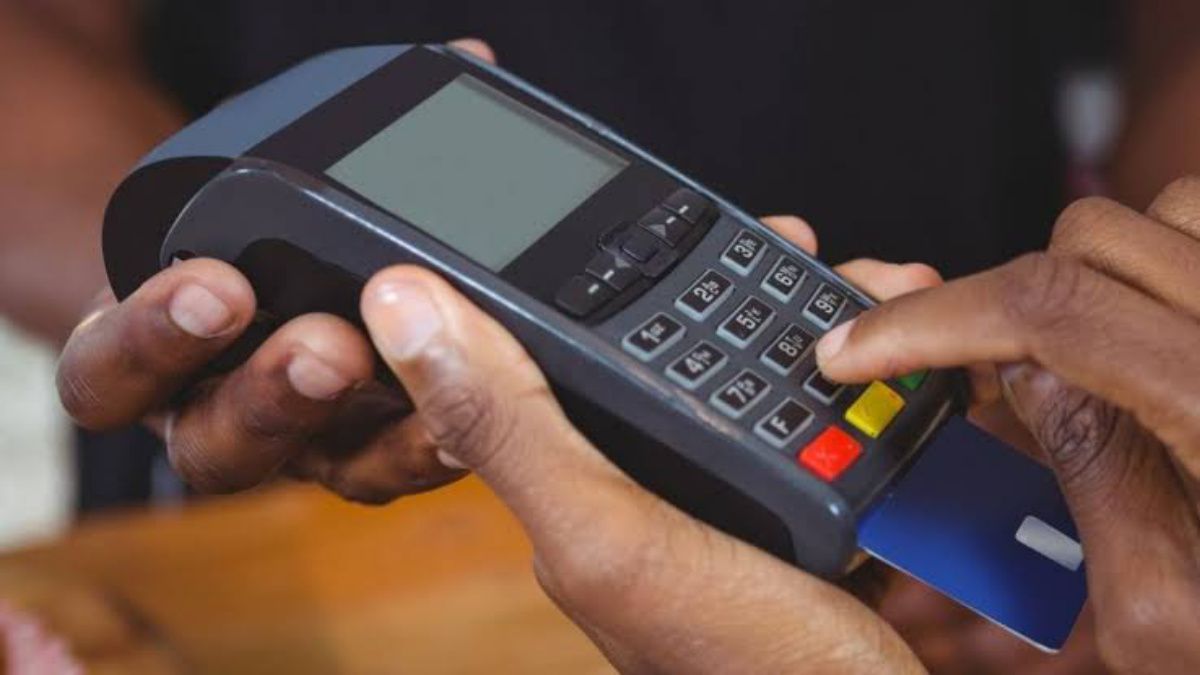
This experience is playing out across Nigeria every single day. POS charges that used to be fifty naira are now one hundred naira. Charges that were one hundred naira are now two hundred or three hundred naira. In some locations, especially during periods of cash scarcity, people are paying as much as 500 naira or even 1,000 naira to withdraw their own money. And nobody seems to have clear answers about why this keeps happening or when it will stop.
The truth is that POS charges are increasing because of a complex mix of factors that most Nigerians don’t fully understand. It’s not just one reason. It’s not just the operators being greedy, though some take advantage. It’s a combination of bank policies, government regulations, cash scarcity, business costs, and market dynamics that all push charges upward. Let’s break down what’s really happening and why your POS withdrawal keeps getting more expensive.
How POS Charges Actually Work
Before understanding why charges are increasing, you need to understand how the POS business model works, because most people don’t know what happens behind the scenes.
POS operators are essentially small business owners who partner with banks or aggregator companies to provide cash withdrawal and payment services in their communities. They’re not bank employees. They’re independent agents trying to make a profit from the service they provide.
When you withdraw money from a POS operator, several parties are involved in the transaction. There’s you, the customer. There’s the POS operator. There’s the aggregator company that manages the POS terminal and connects it to the banking network. There’s your bank. And there’s the operator’s bank. Each of these parties has interests and costs involved in making your withdrawal happen.

The operator pays various charges on their end that you never see. They pay the aggregator company a fee for each transaction, typically around twenty-seven naira per transaction regardless of the amount. They pay bank charges when they deposit or withdraw large amounts of cash to stock their business. They pay for the POS terminal itself, either buying it outright or paying rental fees. They pay for the data connection that allows the POS to work. They pay for the physical space where they operate. They sometimes pay security or informal fees to operate in certain locations.
After paying all these costs, the operator needs to make some profit for their time and risk. They’re providing a service, taking on the risk of holding large amounts of cash, spending their time serving customers, and they need to earn something from all this effort.
The challenge is that the official regulatory charge cap from the Central Bank of Nigeria says POS operators should only charge customers a maximum of fifty naira for withdrawals up to ten thousand naira. But if you’ve withdrawn cash recently, you know that almost nobody follows this cap. The question is why.
The Cash Scarcity Factor
Cash scarcity has been the single biggest driver of increased POS charges in recent years, and understanding this requires looking at how the Nigerian banking system has been functioning.
There have been periods, some lasting months, where banks simply don’t have enough physical cash to give customers. ATMs are empty for days or weeks. Bank branches limit how much you can withdraw over the counter. Even when cash is available, there are long queues and frustrating waits. During these periods, POS operators become the primary source of cash for millions of Nigerians.
When cash is scarce but demand for it remains high, basic economics takes over. POS operators can charge more because people are desperate for cash and have no alternatives. If you need cash urgently and every ATM is empty, you’ll pay three hundred naira or five hundred naira to get it from a POS operator. The scarcity gives operators pricing power they wouldn’t normally have.
But here’s what many people don’t realize. Cash scarcity doesn’t just affect you as the customer. It also affects the POS operators themselves. When banks don’t have cash, operators struggle to restock their businesses. They might have to visit multiple bank branches to withdraw the cash they need to serve customers. They might have to pay unofficial fees to bank staff just to get cash. They might have to buy cash from other sources at premium rates. All of these difficulties and costs get passed on to you as higher charges.
During severe cash scarcity periods, some POS operators actually buy cash from people who have it. Yes, you read that correctly. They pay more than face value for physical cash because they need it to run their business. If an operator pays someone ten thousand naira in bank transfer to get nine thousand, five hundred naira in physical cash, they’re already operating at a loss before serving any customer. They have to charge significantly more just to break even, much less make a profit.
The naira redesign policy and subsequent cash scarcity created chaos in the POS market. Charges that were typically fifty to one hundred naira shot up to three hundred, five hundred, or even one thousand naira in some locations. Even though the worst of that crisis has passed, charges haven’t fully returned to previous levels because the market adjusted to new pricing expectations and operators realized customers would pay more.
Rising Business Costs for POS Operators
Beyond cash scarcity, the general cost of running a POS business has increased substantially, forcing operators to charge more just to remain profitable.

Terminal and equipment costs have gone up. The POS machines themselves cost more now due to dollar exchange rate increases since many are imported. Data costs for running the terminals have increased. Airtime and data that the POS needs to connect to the banking network cost more than they used to.
Physical location costs have risen. Rent for shops or kiosks where POS operators work has increased across most Nigerian cities. If an operator’s rent doubled but they kept their charges the same, their profit margin would collapse. The increased rent gets factored into the charges they need to collect from customers.
Security concerns create additional costs. POS operators hold large amounts of cash, making them targets for armed robbery. Some operators pay for security personnel. Others pay informal security fees to area boys or local groups for protection. These costs didn’t exist or were lower years ago, but they’re real expenses now that get built into pricing.
Banking charges and deposit fees affect operators differently in different banks. Some banks charge POS agents when they deposit or withdraw large amounts. Some banks have monthly maintenance fees on POS accounts. Some banks place limits on how much operators can withdraw in a day, forcing them to use multiple banks and deal with multiple sets of fees. All of this increases operating costs.
Transaction failures create hidden costs that many customers don’t consider. When a POS transaction fails but money is debited from your account, the operator has to spend time helping you resolve it. During busy periods, failed transactions that require follow-up cut into the operator’s productive time. Some operators factor this frustration and lost time into their overall pricing.
The aggregator companies that provide POS services have also increased their fees over time. The per-transaction fee that aggregators charge operators has crept up from around twenty naira to thirty naira or more. This might seem small, but when an operator does hundreds of transactions daily, these small increases significantly impact their total costs.
Bank Policies and Regulatory Environment
The banking sector’s policies and the regulatory environment create pressures that indirectly drive up POS charges even though regulations theoretically cap them.
The official fifty naira charge cap is widely ignored because it’s not enforced effectively and because the economics don’t work for operators at that price point anymore. The Central Bank of Nigeria set this cap years ago when business conditions were different. Costs have increased substantially since then, but the official cap hasn’t been adjusted to reflect new realities. Operators either ignore the cap or they’d have to close their businesses because the economics don’t work.
Banks’ relationships with POS operators vary widely. Some banks support their POS agents well, providing cash when needed and offering reasonable terms. Other banks treat agents poorly, making it difficult to get cash or imposing unreasonable restrictions. Operators dealing with unhelpful banks face higher costs and challenges that get passed on as higher customer charges.
The push toward cashless policies creates contradictory pressures. On one hand, the government and banks want Nigerians to use digital payments more and cash less. On the other hand, people still need cash for many transactions. This contradiction means that while official policy discourages cash, practical reality requires it, and the friction between these positions contributes to higher costs in the cash distribution system.
Bank network issues cause frustration and costs for operators. When bank systems are down or slow, operators can’t process transactions but customers still come expecting service. The lost time and productivity during system downtimes represent costs that operators try to recoup when systems are working.
Regulatory uncertainty makes it hard for operators to plan. Will there be another sudden cash redesign policy? Will withdrawal limits be imposed again? Will new regulations suddenly change how the business works? This uncertainty makes operators more conservative in their pricing because they don’t know what challenges might be coming.
Competition and Market Dynamics
The POS market has become saturated in many areas, but paradoxically, this hasn’t driven prices down the way normal competition would. Understanding why requires looking at the specific dynamics of this market.
There are POS operators everywhere now. On many streets, you can find three, four, or five POS businesses within walking distance of each other. You’d expect this competition to push charges down as operators try to attract customers with lower prices. But that’s not happening consistently.
One reason is that POS operators often tacitly coordinate on pricing. In a given area, operators tend to charge similar rates. If one operator charges two hundred naira, others charge the same or similar amounts. They don’t usually compete by undercutting each other’s prices dramatically because they all face similar costs and they all know that race-to-the-bottom pricing would make everyone unprofitable. This informal price coordination keeps charges elevated.
Customer loyalty is limited in the POS market. Most people use whichever operator is closest or most convenient at the moment they need cash. They don’t usually travel significantly out of their way to save fifty naira on POS charges. This means operators don’t have strong incentives to compete on price because lower prices won’t necessarily win them significantly more business.
Peak time pricing has become common. During busy periods, especially evenings and weekends when ATMs are more likely to be empty and cash demand is high, POS charges go up. The same operator who charges one hundred and fifty naira in the afternoon might charge three hundred naira in the evening when demand is higher. This dynamic pricing maximizes operator profit but frustrates customers who feel gouged.
Cash availability affects local pricing. In areas where cash is consistently hard to get, charges stay high. In areas where banks are nearby and ATMs usually work, POS charges tend to be lower because operators face more competition from free ATM withdrawals. Your neighborhood’s access to banking infrastructure directly influences the POS charges you pay.
Different customer types pay different rates. Operators often charge regular customers, people they know from the community, lower rates than they charge strangers or one-time customers. This personalized pricing is common but creates inconsistency in what people pay for the same service.
The Informal Economy and Cash Dependency
Nigeria’s heavy reliance on cash for transactions, driven by the large informal economy, creates sustained demand for POS services that allows charges to remain high.
Most Nigerian commerce still happens in cash. Market vendors, transport workers, small businesses, informal services, rent payments, and many everyday transactions are still cash-based despite the push toward digital payments. As long as cash remains essential for daily life, people will pay POS charges because they have no choice.
Rural and underbanked areas depend heavily on POS operators because formal banking infrastructure is limited or nonexistent. In these areas, the POS operator might be the only financial service available. This monopoly position allows higher charges because customers have literally no alternative.
Trust issues with digital payments keep many Nigerians preferring cash. People worry about failed transactions, money getting stuck, accounts being debited without receiving value, or not being able to dispute problems. Cash feels safer and more tangible. This cultural preference for cash sustains the POS business and allows charges to remain elevated.
The gig economy and informal work often require cash. Okada riders, keke drivers, casual laborers, market traders, and street vendors all deal primarily in cash. They need POS operators to convert their cash earnings into bank deposits or to withdraw cash for daily operations. This creates a large customer base that must use POS services regularly regardless of charges.
Elderly people and less educated populations struggle with digital banking and ATMs but can easily use cash. They rely on POS operators as intermediaries to access their money. This vulnerable population has little choice but to pay whatever charges are asked because the alternatives are too complex for them.
What Actually Determines the Charge You Pay
When you walk up to a POS operator, several factors influence what charge they’ll quote you, even though you’re not usually aware of these considerations.
The amount you’re withdrawing matters. Larger withdrawals typically have higher absolute charges even if the percentage is lower. Withdrawing five thousand naira might cost you one hundred naira. Withdrawing twenty thousand naira might cost you four hundred naira.
The time of day affects pricing. Morning transactions when cash is more available might be cheaper. Evening transactions when cash is running low and demand is high tend to cost more.
Your relationship with the operator influences the price. Regular customers often get better rates than strangers. If you’re known in the community and use that operator frequently, you might pay one hundred naira while a stranger pays two hundred naira for the same withdrawal.
Current cash availability determines charges. If the operator has plenty of cash and knows they can restock easily, charges might be lower. If cash is tight and they’re not sure when they’ll get more, charges go up.
Competitive pressure in the immediate area affects pricing. On a street with five POS operators competing for business, charges might be lower than on a street with only one operator.
Your urgency shows in your behavior and appearance. If you seem desperate for cash, some operators might quote higher charges knowing you’ll pay. If you seem willing to walk away or shop around, you might get better rates.
The operator’s business model and profit goals matter. Some operators run POS as their primary business and need higher daily profits. Others run it as a side income stream and are happy with smaller margins per transaction.
The Real Cost to Nigerian Consumers
These increasing POS charges represent a real financial burden that disproportionately affects certain groups.
Low-income Nigerians are hit hardest. If you earn fifty thousand naira monthly and withdraw in small amounts of five or ten thousand naira several times a month, paying one hundred and fifty to three hundred naira each time means you’re losing six hundred to one thousand, two hundred naira monthly just to access your own money. That’s a significant percentage of a small income.
People in areas with poor banking infrastructure pay the most. If you live somewhere with few ATMs or banks, you have no choice but to use POS regularly and pay whatever rates operators charge. Urban residents near banks might rarely use POS and can avoid the charges, but rural residents or those in underserved areas cannot.
Small business owners who handle cash daily face substantial cumulative charges. A trader who withdraws cash multiple times weekly to buy stock can easily spend five to ten thousand naira monthly on POS charges. Over a year, that’s sixty to one hundred and twenty thousand naira just for the privilege of accessing money for business.
The charges function as an informal tax on cash usage. You’re paying a fee every time you need physical money. As these charges increase, they effectively punish people for needing cash even though Nigeria’s economy and infrastructure still require cash for most transactions.
The psychological impact creates stress and frustration. The feeling of being gouged, of having to pay more and more for the same service, of being unable to avoid charges even though you’re accessing your own money. This erodes trust and creates resentment even though individual operators might have legitimate reasons for their pricing.
What Can Actually Be Done
For individual consumers, options to avoid or reduce POS charges are limited but they exist.
Plan cash withdrawals strategically. Instead of withdrawing small amounts frequently, withdraw larger amounts less often if you can safely store cash. This reduces the number of times you pay charges even if the per-transaction charge is higher.
Use ATMs when possible. Yes, ATMs are often empty or broken, but when they work, they’re free. Making the effort to find working ATMs when you can reduces reliance on POS and saves money over time.
Adopt digital payments where practical. For transactions that can be done via transfer, paying directly from your account to the recipient’s account eliminates the need to withdraw cash and pay POS charges. Though this requires the recipient to accept transfers and requires trust in the digital system.
Build relationships with specific POS operators. Regular customers often get better rates. If you consistently use the same operator, they might charge you less than they charge random customers.
Negotiate charges politely. Some operators will reduce their quoted charge if you ask nicely, especially if you’re withdrawing a large amount or if you’re willing to walk away. Not all operators will negotiate, but some will.
Withdraw cash during off-peak times when charges might be lower. Morning transactions before the rush or mid-afternoon when things are quiet might cost less than evening peak hours.
For the market overall, meaningful change requires regulatory and structural interventions that are beyond individual control.
The Central Bank needs to either enforce the existing charge cap strictly or adjust it to realistic levels that reflect actual business costs. The current situation where there’s an official cap that everyone ignores helps nobody and creates a lawless market.
Banks need to ensure better cash availability so that POS operators aren’t forced to scramble for cash at premium prices that get passed to customers. Functional ATMs and adequate cash in bank branches would reduce the scarcity premium that drives up POS charges.
Financial infrastructure needs improvement in underserved areas. More banks, more ATMs, and more access points for cash would increase competition and reduce the monopoly pricing power of POS operators in areas with limited alternatives.
Digital payment infrastructure needs to become more reliable and trustworthy so that people can confidently reduce cash usage. When transfers work consistently, when failed transactions are resolved quickly, and when people trust the system, they’ll willingly move toward digital and reduce dependence on cash and POS services.
Transparency about charges would help. If operators had to clearly display their charges and stick to advertised rates rather than quoting different prices to different customers, the market would function more fairly.
Understanding the Bigger Picture
The rising POS charges you’re experiencing aren’t happening in isolation. They’re a symptom of broader issues in Nigeria’s financial system and economy.
The charges reflect the dysfunction in cash management and distribution. In a well-functioning financial system, getting your own money out of the bank should be simple and free. The fact that millions of Nigerians regularly pay significant fees just to access their money shows that the system isn’t working properly.
The charges reveal the gap between official policy and practical reality. The government wants a cashless economy but hasn’t created the infrastructure and trust needed for digital payments to fully work. So cash remains necessary, but accessing it becomes increasingly expensive.
The charges demonstrate how informal systems emerge to solve formal system failures. Banks can’t or won’t provide adequate cash access. POS operators fill that gap. But because it’s informal and unregulated in practice, pricing is arbitrary and protection is minimal.
The charges show how economic pressure flows downward. When banks face liquidity challenges, when forex scarcity affects equipment costs, and when inflation raises business expenses, all of this pressure flows down to the end consumer as higher POS charges. The person at the bottom of the economic chain, the ordinary Nigerian trying to withdraw money, bears the accumulated weight of all these systemic problems.
Living With the Reality
For now, rising POS charges are a reality that most Nigerians must accept and adapt to even while hoping for systemic improvements.
Budget for POS charges as a regular expense if you rely on these services. Include them in your monthly planning rather than being surprised and frustrated each time. Knowing you’ll spend, say, one thousand naira monthly on POS charges lets you plan accordingly.
Stay informed about your options. Know where the working ATMs are in your area. Know which POS operators charge reasonable rates. Know when digital payment is practical. Information helps you make better decisions and avoid overpaying when alternatives exist.
Don’t waste energy being angry at individual operators. Most are just trying to survive in a difficult business environment with real costs and pressures. The problem is systemic, not personal.
Advocate for better financial infrastructure in your community. Community pressure on banks to maintain working ATMs, community demands for better cash availability, and collective action around financial access issues. Individual voices are weak, but communities speaking together can create pressure for improvement.
The charges will likely continue increasing until fundamental changes happen in Nigeria’s financial system, cash management, and economic conditions. That’s not the answer anyone wants to hear, but it’s the honest assessment. Understanding why charges keep rising doesn’t make paying them less frustrating, but it does help you respond strategically rather than just feeling helpless and angry every time you need to withdraw cash.
Don’t want to miss the best from GuidesCafe?
- Set us as a favorite source in Google Discover to see our latest updates first.
- You can also add us as a preferred source in Google Search by clicking the button below.
