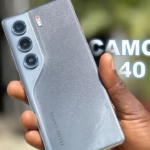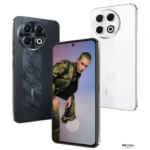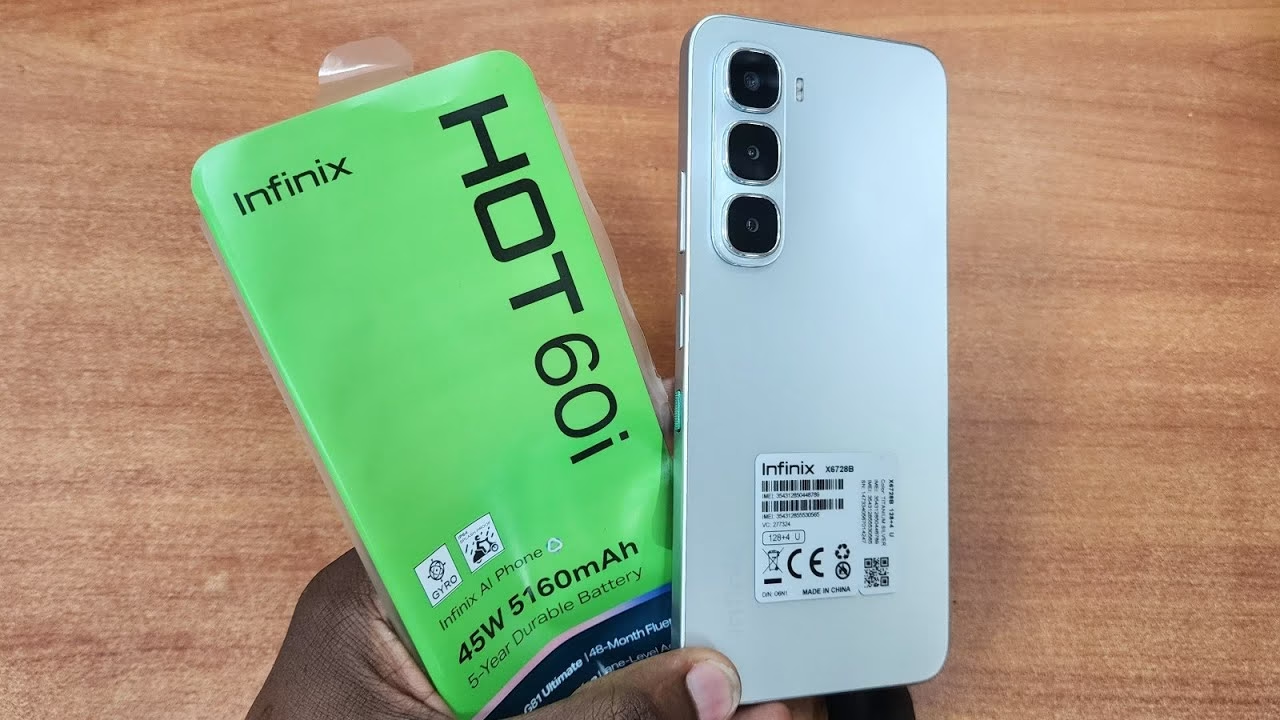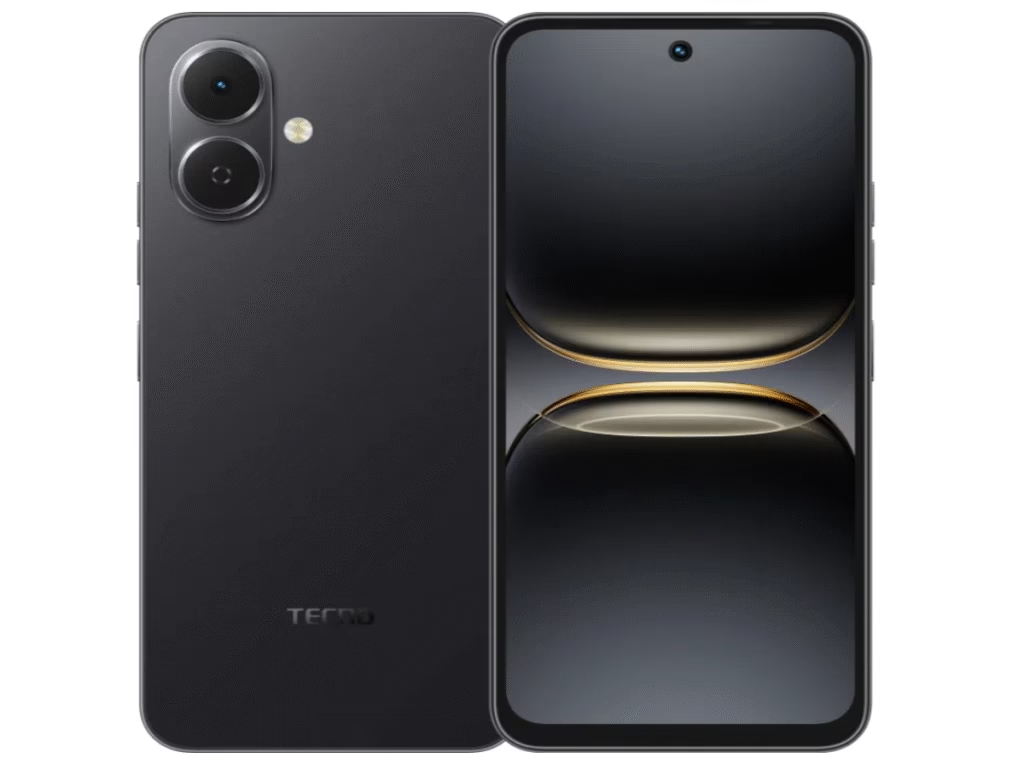

When someone walks into a phone shop in Nigeria with a tight budget, the Tecno Pop 10 is one of the phones they’ll likely see. At around 65,000 to 105,000 naira depending on the variant and where it’s purchased, it’s positioned as an ultra budget smartphone for people who need something functional without spending much.
But here’s the question worth asking: at this price point, what does a buyer actually get? And more importantly, what compromises come with it?
This is the brutally honest truth about what this phone can and cannot do.
First, Know What’s Actually Being Bought
The Tecno Pop 10 comes in different configurations, and this matters because what someone gets depends on which variant the seller has.
Don't MIss This Guide
The base model has 3GB RAM with 64GB storage and costs around 65,000 to 75,000 naira. The higher variant has 4GB RAM with 128GB storage and goes for 95,000 to 105,000 naira.
The processor varies by region. Some units have the Unisoc T7250, others have the Unisoc T606 or T615. They’re all entry level processors, so performance is similar regardless.
The phone runs Android 15 Go Edition with HiOS 14. Go Edition is a stripped down version of Android designed for phones with limited resources. It’s not the full Android experience, but it’s optimized to work on weaker hardware.
Most Nigerians will encounter the 3GB RAM and 64GB storage variant with the Unisoc T7250 processor because it’s the cheapest option.
Don't MIss This Guide
The Display Is Surprisingly Large
The phone has a 6.67 inch IPS LCD display with 720 x 1600 pixel resolution. The screen is genuinely big, which is nice when watching videos or reading.
The international version reportedly has a 120Hz refresh rate, which means scrolling feels smoother than typical budget phones. However, some sources say it’s 90Hz, and it’s possible different regions get different refresh rates. Either way, it’s better than the standard 60Hz most cheap phones offer.
The resolution is 720p, not full HD. On a screen this large, the lack of sharpness is noticeable if someone looks closely. Text has visible pixels. Images aren’t super crisp. But for everyday use like WhatsApp, social media, and videos, it’s acceptable.
Brightness is mediocre. Outdoors in direct sun, users will struggle to see the screen clearly. The maximum brightness just isn’t high enough for Nigerian midday conditions. Indoor use is fine.
Colors are okay for an IPS LCD panel. Nothing impressive, but not terrible either. Videos look watchable. Photos display reasonably well. It’s what anyone would expect at this price.
Performance Is Slow But Functional
The reality needs to be stated clearly: this phone is slow. Not broken slow, but noticeably, frustratingly slow for anyone used to anything better.
The Unisoc T7250 processor with 3GB RAM is bare minimum hardware. Apps take several seconds to open. WhatsApp works, but there’s lag when switching between chats or loading media. Instagram and Twitter scroll with occasional stutters.
Don't MIss This Guide

Taking a photo and then trying to view it in the gallery has a delay. Opening the camera app takes a few seconds. Typing messages can feel laggy for fast typers.
Multitasking is painful. With more than three or four apps open, switching between them causes noticeable delays. The phone struggles to keep apps in memory, so they constantly reload when users switch back to them.
The 3GB RAM is the main problem. It’s just not enough for how people use smartphones today. Even with Android Go Edition’s optimizations, users constantly run into performance walls.
The 4GB RAM variant would be better, but even that is limited. Anyone who can afford the higher RAM version should get it. But expectations should remain realistic about getting an entry level experience.
Gaming is basically not an option. Very light games like Temple Run or Candy Crush barely work. Anything more demanding either won’t run or will be completely unplayable with terrible frame rates.
This is a phone for basic communication and light web browsing. Anyone needing more than that needs a different phone.
The Camera Is Very Basic
The phone has a 13MP rear camera and an 8MP front camera. Both have dual LED flash, which is actually nice to have at this price.
In good daylight outdoors, the rear camera takes usable photos for WhatsApp or social media. They’re not impressive, but they’re acceptable. Colors are oversaturated, detail is soft, but the subject is recognizable.
The moment lighting gets less than ideal, the camera struggles badly. Indoor photos come out noisy and blurry. Evening photos are dark and lack detail. The camera just doesn’t handle challenging light well.
The dual LED flash helps for close up shots, but creates harsh, unnatural lighting. Photos will look clearly flash lit, not naturally illuminated.
Don't MIss This Guide
Portrait mode barely works. The edge detection is inconsistent. Sometimes it blurs the subject’s hair or ears. Other times it leaves the background sharp. It’s unreliable enough that many users will stop using it.
The 8MP front camera is similar. In good light, selfies are acceptable for social media. In poor light, they’re noisy and dark. The dual flash on the front helps but creates that harsh look.
Video recording quality is basic. The footage is shaky, colors are washed out, and detail is poor. It’s enough to capture a moment, but the videos won’t impress anyone.
If photography matters at all, this camera will disappoint. It’s functional for necessity, not enjoyment.
Battery Life Is The Best Feature
The 5000mAh battery is genuinely the phone’s strongest point. This is where the Pop 10 actually delivers value.
With light to moderate use, the phone consistently gets through a full day with 25 to 35 percent battery remaining. Some days with very light use, it can make it well into the second day before needing to charge.
The combination of a large battery, low resolution display, and weak processor actually works in the battery’s favor. These components don’t consume much power, so the battery lasts longer.
15W charging is not fast by modern standards. From completely empty to full charge takes about two hours. From 0 to 50 percent takes roughly an hour. It’s slow, but the battery life is good enough that users aren’t charging constantly anyway.
The charger comes in the box with a USB Type C cable. At least there’s no need to spend extra money on accessories.
For people who worry about their phone dying during the day or who don’t always have access to charging, this battery performance is genuinely valuable.
Build Quality Feels Cheap
The phone has a plastic back, plastic frame, and glass front. It weighs 189 grams, which is reasonable for the size.
It feels like a cheap phone when held. The plastic is lightweight and hollow feeling. There’s no premium touch here. Anyone holding it will be very aware they’re holding a budget device.
The phone has IP64 rating for dust and splash resistance. This means it can handle dust and water splashes but not full submersion. For Nigerian conditions with dust and occasional rain, this protection is useful.
The design is fine. Nothing special, but not ugly either. It comes in Ink Black, Titanium Grey, Veil White, and Turquoise Green. The colors look plain but acceptable.
The side mounted fingerprint sensor works reasonably well. It’s not the fastest, and sometimes requires a second attempt, but it’s functional. Face unlock is available and works in good lighting.
The phone has dual stereo speakers with DTS sound enhancement. For a budget phone, having two speakers instead of one is nice. The sound quality is basic but better than single speaker phones.
There’s an IR blaster that lets users control TVs and other appliances. Some people will find this useful, others won’t care.
A case should be purchased immediately. The plastic body will scratch easily and doesn’t look like it will survive drops well.
Storage Fills Up Fast
The 64GB storage variant is what most people will buy because it’s cheaper. This is a mistake for anyone who can afford the 128GB version.
After the operating system and pre installed apps, maybe 50GB of usable space remains. Install WhatsApp, Instagram, Twitter, Facebook, a few games, take some photos, and storage runs low quickly.
The phone supports microSD card expansion up to 1TB, which helps. Photos and videos can be stored on the card. But apps need to install on internal storage, and that 64GB fills up quickly.
The 128GB variant should be purchased if at all possible. The extra storage makes a real difference in day to day usability.
The storage type is eMMC, which is slower than the UFS found in better phones. This becomes noticeable when installing apps or transferring files. It’s not terrible, but it’s noticeably slower than mid range or flagship devices.
Software Has Too Much Bloatware
Android 15 Go Edition is the latest Android version, which is good. But HiOS 14 on top of it brings problems.
The phone comes with too many pre installed apps. Tecno’s own apps for various functions, promotional apps, games nobody asked for. Some can be uninstalled, others can only be disabled, and some are permanent.
The interface is colorful and cluttered. Notifications are aggressive. Apps constantly suggest features or send promotions. Time will be spent turning off notifications.
Performance is as optimized as it can be for this weak hardware. Crashes or major bugs aren’t common issues. The phone is slow, but it’s consistently slow, not randomly broken.
Software update promises from Tecno are vague. Multiple years of Android updates or frequent security patches shouldn’t be expected. One update might arrive if users are lucky, but that’s about it.
Connectivity Works Fine
The phone supports 4G LTE on all Nigerian networks. MTN, Airtel, Glo, and 9mobile all work without issues. Call quality is acceptable. Data speeds depend on the network, not the phone.
WiFi connectivity is reliable. Bluetooth works for connecting headphones and accessories. GPS is accurate enough for Google Maps navigation, though it takes a moment to lock onto location.
The phone has dual SIM slots, which many Nigerians need for managing different networks. One slot can also be used for a microSD card if storage expansion is chosen over dual SIM.
No 5G exists, but that’s expected at this price and 5G isn’t widely available in Nigeria anyway.
Who Should Actually Buy This Phone
The Tecno Pop 10 makes sense for very specific people in very specific situations.
If someone’s absolute maximum budget is 65,000 to 75,000 naira and they cannot spend more, this phone provides basic smartphone functionality. It works for calls, texts, and light WhatsApp use.
If buying a first smartphone for someone who only needs basic features, like an elderly parent or young child, the Pop 10 handles simple tasks without complicated features.
If a backup phone or emergency device is needed that won’t be used heavily, the cheap price and good battery life make sense.
If replacing a feature phone or very old smartphone from years ago, the Pop 10 will feel like an upgrade in screen size and basic capabilities.
If battery life is literally the only priority and everything else doesn’t matter, the 5000mAh battery genuinely delivers.
Who Should Absolutely Avoid This Phone
If someone uses their phone regularly for social media, they’ll be frustrated by the slow performance. Apps lag, switching is delayed, and the experience is consistently sluggish.
If photos are taken with any frequency or photo quality matters, the camera will disappoint. It’s functional for necessity, not for memories worth keeping.
If any mobile games are played, even light ones, this phone cannot provide an acceptable gaming experience.
If even 20,000 to 30,000 naira more can be saved, significantly better phones become available. The performance jump from this price level to 120,000 to 140,000 naira is dramatic.
If a smooth modern smartphone experience is expected, disappointment is guaranteed. This is an ultra budget device with ultra budget performance.
Better Alternatives If Possible
For anyone considering the Pop 10 but able to stretch their budget even slightly, these alternatives exist.
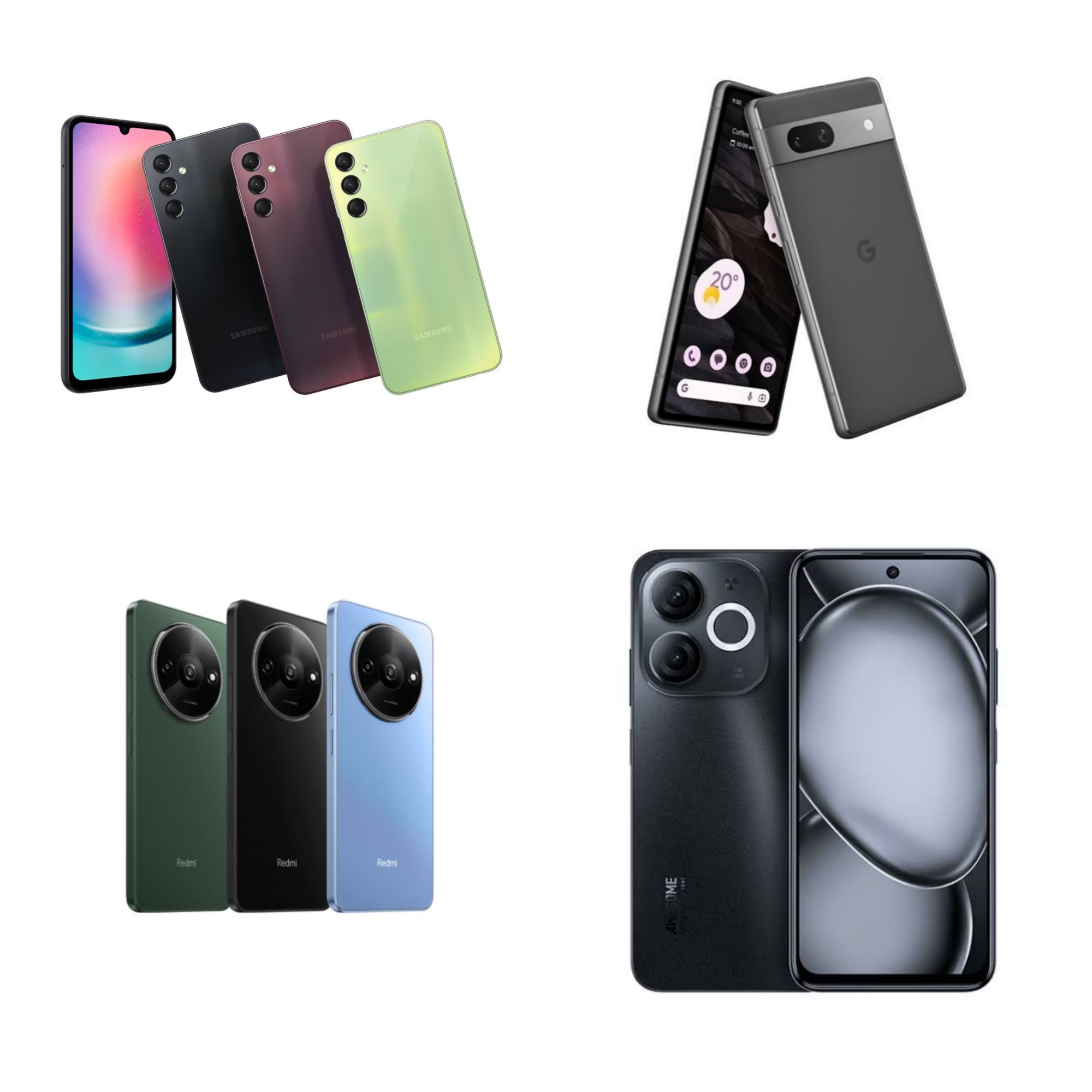
The Tecno Spark Go 2 or Infinix Smart 10 often offer better specifications at similar or slightly higher prices.
Used or refurbished phones from a year or two ago in the 100,000 to 120,000 naira range often provide much better performance than new ultra budget phones.
Xiaomi Redmi phones in the 110,000 to 130,000 naira range typically offer better value with superior processors and cameras.
Saving an extra month and buying something in the 130,000 to 150,000 naira range gets into territory where phones are noticeably better in every way.
The Brutal Truth
The Tecno Pop 10 is an ultra budget phone that delivers exactly what anyone would expect from an ultra budget phone. Basic functionality with compromises everywhere.
The battery life is genuinely good. The large display is nice for media. The IP64 rating adds some durability. These are real positives.
But the performance is slow and frustrating. The camera is barely functional. The 3GB RAM is insufficient for how people use phones today. The 64GB storage fills up quickly. These are real negatives that affect daily use.
At 65,000 to 75,000 naira for the base model, buyers get what they pay for. Not more, not less. It’s a phone that works for absolute basic needs when there are absolutely no other options.
If this is genuinely all someone can afford, the Pop 10 will serve them for basic communication and light use. They won’t love it, but it will function.
But if more money can be saved and the purchase can wait for something better, that’s the smarter choice. The difference between this phone and something in the 120,000 to 150,000 naira range is night and day.
This is a phone for people with no other choices. For anyone with choices, choosing better is recommended.