

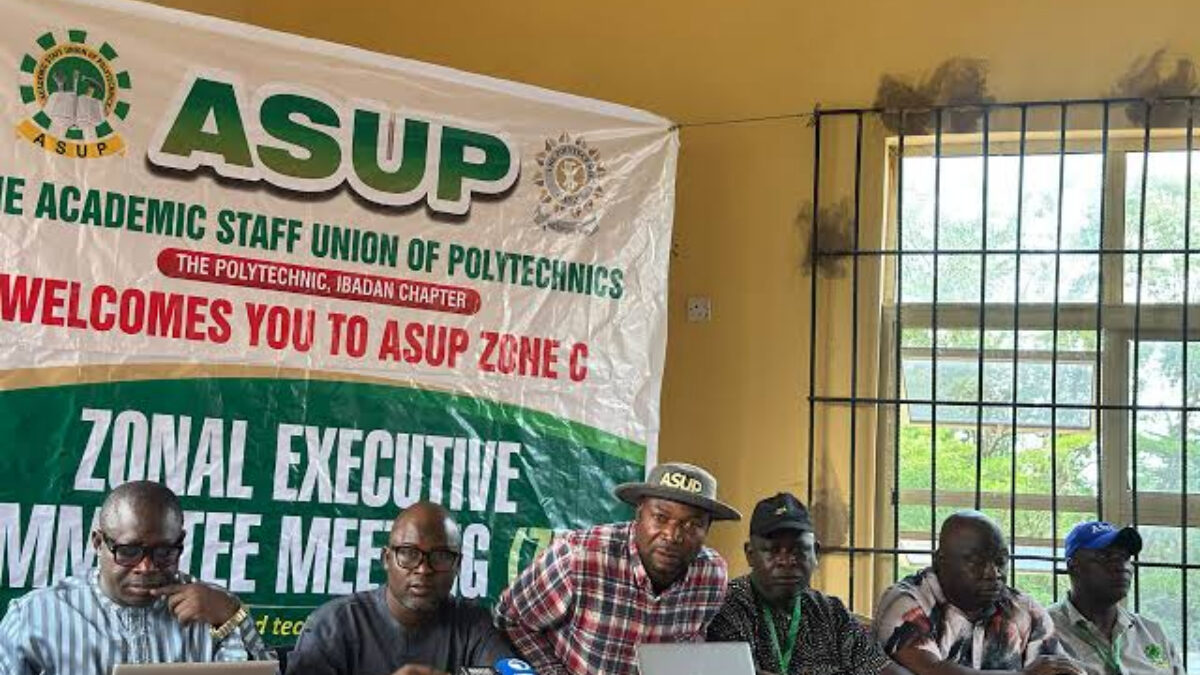
Lecturers in state-owned polytechnics, colleges of technology and monotechnics in Ogun, Oyo, Osun and Ekiti states are on an indefinite strike. The Academic Staff Union of Polytechnics (ASUP), Zone C, says the action began on Monday, 16 November 2026, after a 15-day ultimatum to the four state governments ran out on 10 November without the allowances it is demanding being paid.
The union made the strike public at a press conference on Thursday, 19 November, at the ASUP secretariat in The Polytechnic, Ibadan. Its zonal coordinator, Adekunle Masopa, read the statement on behalf of the Zonal Executive Council. If you study at a state polytechnic in any of these four states, this is the reason lectures and other academic activities may have stopped.
Two allowances sit at the centre of the ASUP strike
ASUP is asking the four states to start paying the Consolidated Academic Tools Allowance (CATA) and the Earned Academic Allowance (EAA) to academic staff in their polytechnics. It also wants all arrears of both allowances from 1 January 2026 to date.
Both allowances come from the 2025/2026 Federal Government/ASUP agreement. According to the union, the Federal Government finished renegotiating the old 2009/2010 agreement with ASUP in April 2026 through the committee led by Yayale Ahmed, and the new agreement took effect from 1 January 2026. The union’s complaint is that some state governments have not applied it to the polytechnics they own.
- New FG/ASUP agreement takes effect
- Union writes to the four governors
- Reminder letter sent
- 15-day ultimatum expires
- Indefinite strike beginsOgun, Oyo, Osun and Ekiti
Dates as stated by ASUP Zone C at its 19 November press conference.
The ultimatum itself was issued after ASUP’s 118th National Executive Council meeting in Abuja. The union singled out Ondo State for praise, describing it as the first and only state in the zone to implement the 2025/2026 agreement, which is why Ondo’s state polytechnics are not part of this action.
The strike has spread beyond the South-West
Zone C is not the only part of the union to walk out this month. Two other chapters have also stopped work on the directive of ASUP’s national leadership:
| Institution or zone | Type of strike | Started | Main complaint |
|---|---|---|---|
| State polytechnics in Ogun, Oyo, Osun and Ekiti | Indefinite | 16 November 2026 | CATA and EAA not paid |
| Kenule Beeson Saro-Wiwa Polytechnic, Bori, Rivers State | Indefinite | 16 November 2026 | Agreed academic allowances not implemented |
| Abdu Gusau Polytechnic, Talata Mafara, Zamfara State | Two-week warning strike | 17 November 2026 | Outstanding welfare demands |
At the time the strikes were announced, none of the affected state governments had reached a deal with the union, and no resumption date has been given for any of them.
What students in the affected polytechnics should do now
- Check whether your school is state-owned. This directive covers state polytechnics, colleges of technology and monotechnics, so confirm who owns your institution before assuming classes are off.
- Watch your school’s official notices and portal for any change to lecture or exam timetables, rather than relying on forwarded messages.
- Keep up with deadlines that don’t depend on lecturers, such as student loan steps. Some schools are still publishing NELFUND notices, so read our explainer on whether your school can force you to take a NELFUND loan.
- Use the break to revise. When strikes end, schools often move quickly to exams, so the time is better spent on your course notes than waiting.
Strikes by campus unions have been a recurring story this term, from LAUTECH’s indefinite ASUU strike to UNICROSS lecturers returning to strike. The difference here is that the dispute is about money already agreed at federal level, so a quick end depends on each of the four state governments deciding to pay CATA, EAA and the arrears from January.








Join the conversation