

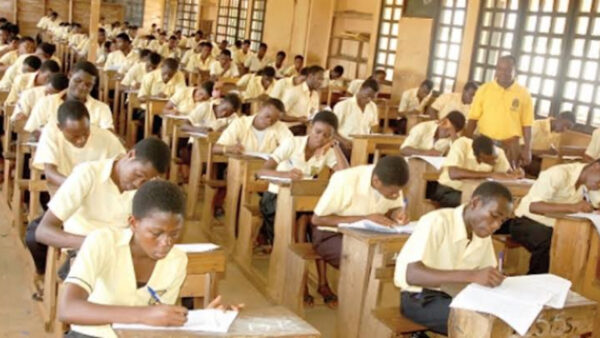
Students finishing senior secondary school in Nigeria will have to sit WAEC or NECO from 2027, or one of the two other exams the government approves, under new national guidelines from the Federal Ministry of Education that came to light this week. The rule covers four exam bodies: the West African Examinations Council (WAEC), the National Examinations Council (NECO), the National Business and Technical Examinations Board (NABTEB) and the National Board for Arabic and Islamic Studies (NBAIS).
For most public school students nothing changes, because they already write one of these exams in SS3. The parents who need to pay attention are those with children in private schools that only prepare students for foreign certificates such as the Cambridge IGCSE. Reports on the guideline say it reaches those schools too, which means a Nigerian exam would sit alongside the international one rather than being optional.
What the ministry actually wrote
The guideline is titled as a framework for mandatory participation in an approved senior secondary school qualifying examination. The ministry says it starts with the 2027 academic year and gives its reasons in plain terms.
This guideline, which takes effect from the 2027 academic year, is aimed at establishing a uniform national framework for the certification and quality assurance of students completing senior secondary education in Nigeria and to preserve national educational standards, ensure curricular alignment, and maintain robust data tracking.
The ministry also said students educated within the Nigerian system should leave school with a Nigerian terminal assessment, conducted by approved examination bodies, as proof that they completed senior secondary education. In other words, a school can still offer an international certificate, but under this guideline it can’t be the only exit exam its students write.
Who feels this rule the most
If your child attends a public or mission school that already registers SS3 students for WASSCE or NECO SSCE, your plan stays the same. If your child attends a school that runs only a British or American curriculum, ask the school now how it intends to comply, which exam it will register students for, and whether the extra preparation and registration fees will be added to your bill.
Students in SS2 this session are the first group the 2027 start date affects, so schools have only a few months to sort out registration. Students already holding a Nigerian O’level result from an earlier sitting don’t need to do anything.
Reaction has been split. Some education operators argue the rule pulls high-performing schools backwards, while others say any school operating in Nigeria should assess students through Nigerian exam bodies. The ministry has not published how it will enforce the guideline or what happens to schools that don’t comply, so watch for a follow-up circular before registration opens.
The 2027 exam calendar the rule fits into
The guideline lands in the same year the government wants to tighten the whole exam calendar. Under the ministry’s proposed timetable, which is not yet final, NECO’s school exam would come before WAEC’s for the first time, with results targeted for August so admissions can begin in September. We broke down that proposal in our piece on the proposed 2027 exam timetable.
- NECO SSCE (school candidates)Proposed
- WAEC WASSCE (school candidates)Proposed
- Results release targetAugust 2027NECO, WAEC, NABTEB and NBAIS
Proposed by the Federal Ministry of Education and not yet confirmed by the exam bodies.
The UTME is proposed for March 15 to 25, 2027, ahead of both school exams, which we covered in our report on the March UTME plan.
A separate law change is also moving through the Senate
On Wednesday, November 11, 2026, the Senate passed a bill to amend the National Senior Secondary Education Commission Act No. 45, 2023. The executive bill aims to strengthen how the commission coordinates public senior secondary education with state ministries and boards. It still needs the House of Representatives to concur and the President to sign it, and nothing published so far ties it directly to the exam guideline.
For families with a child in SS2 at an international school, the useful move this term is a written answer from the school on which Nigerian exam it will enter students for in 2027, and what that will cost.


Join the conversation